
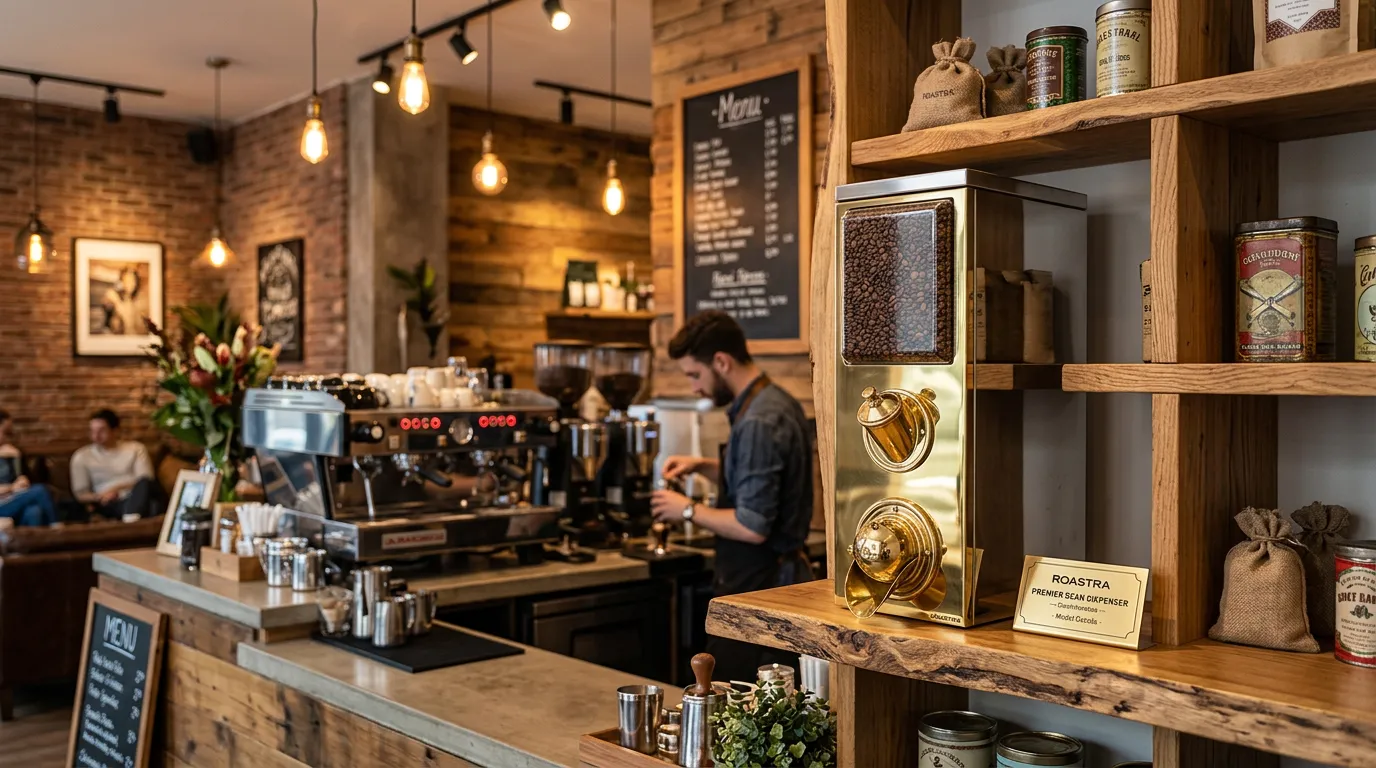
Control the storage environment
Roasted coffee changes after roasting. A professional display should be located away from direct sunlight, steam and strong heat sources. The surrounding environment matters as much as the container itself.
Use a first-in, first-out routine
Refilling without a rotation method can leave older beans at the bottom of the silo. Record the roast date and batch, empty and clean the unit at planned intervals, and avoid mixing batches when traceability is important.
Set a practical fill level
The ideal fill level is based on turnover. A visually full silo may look attractive, but slow-moving coffee should be filled in smaller quantities so the display supports freshness rather than static inventory.
Create a repeatable cleaning schedule
Coffee oils and fine particles accumulate on contact surfaces. Cleaning frequency should reflect bean oiliness, turnover and local food-safety procedures. Follow the manufacturer's product-care instructions.
Do not treat the display as long-term storage
A silo is part of the point-of-service or point-of-sale system. Reserve stock should remain in the packaging and storage conditions defined by the roaster. Refill the display from controlled stock instead of using it as the only storage location.
Record batches and roast dates
Where traceability matters, assign each silo position to a current coffee and batch. Record when it was filled, when the product changed and when the unit was cleaned. This prevents unidentified carryover between coffees.
Adjust the routine to the coffee
Very dark or oily coffees can leave more residue than lighter coffees. Slow-moving coffees also remain in contact with the display for longer. Cleaning and fill quantities should therefore be based on the actual product rather than one universal timetable.
Protect the display from the room
Do not position a silo where a window, heater, steam source or high-output task light creates an avoidable heat load. Record the room conditions during layout planning so the display location supports the same freshness routine expected from the packaging and reserve-stock area.
Create a shift handover
A simple handover should identify low fill levels, the current batch, any product scheduled to change and the most recent cleaning action. This keeps the display consistent when several people work across the same café or retail location.
NEED A DIMENSION-BASED ANSWER?
Turn this guide into a working display plan.
Enter the available space, number of coffees and expected daily use to receive a model, quantity and capacity recommendation.
Open the Studio ↗